The pile that has to exist
.Before a return starts, a few things have to be true. The months you want on the return are closed. Payroll is already arranged on the system you pay people from. The sales tax address has been checked. The property list, if it is due, is gathered from those same months.
Clean numbers are that pile, not a mood. A number is clean when the bank already stood behind it.
Once the pile ties, the statements and the shorter reports are readings of it, and a statement that races ahead of the tie is marked as a draft. A statement that outruns the close is labeled as a draft until the tie exists.
The note will name the absent piece. We will not paper over the gap so the return can look started.
The order inside the pile
.Books first. Then payroll setup, which is not the same thing as running payday. Then reconciliations. Then statements. Then the dates. Then the return.
Skipping ahead feels fast and costs a rebuild. The rebuild is where a deposit gets counted twice or a wage gets counted in the wrong quarter.
If the only thing you have is a shoebox of a year, the first engagement is the close, not the return. We will say that on the call.
You can write before every month is perfect. Tell us which month you trust. You need to know which month you trust and which ones you do not.
The storm window
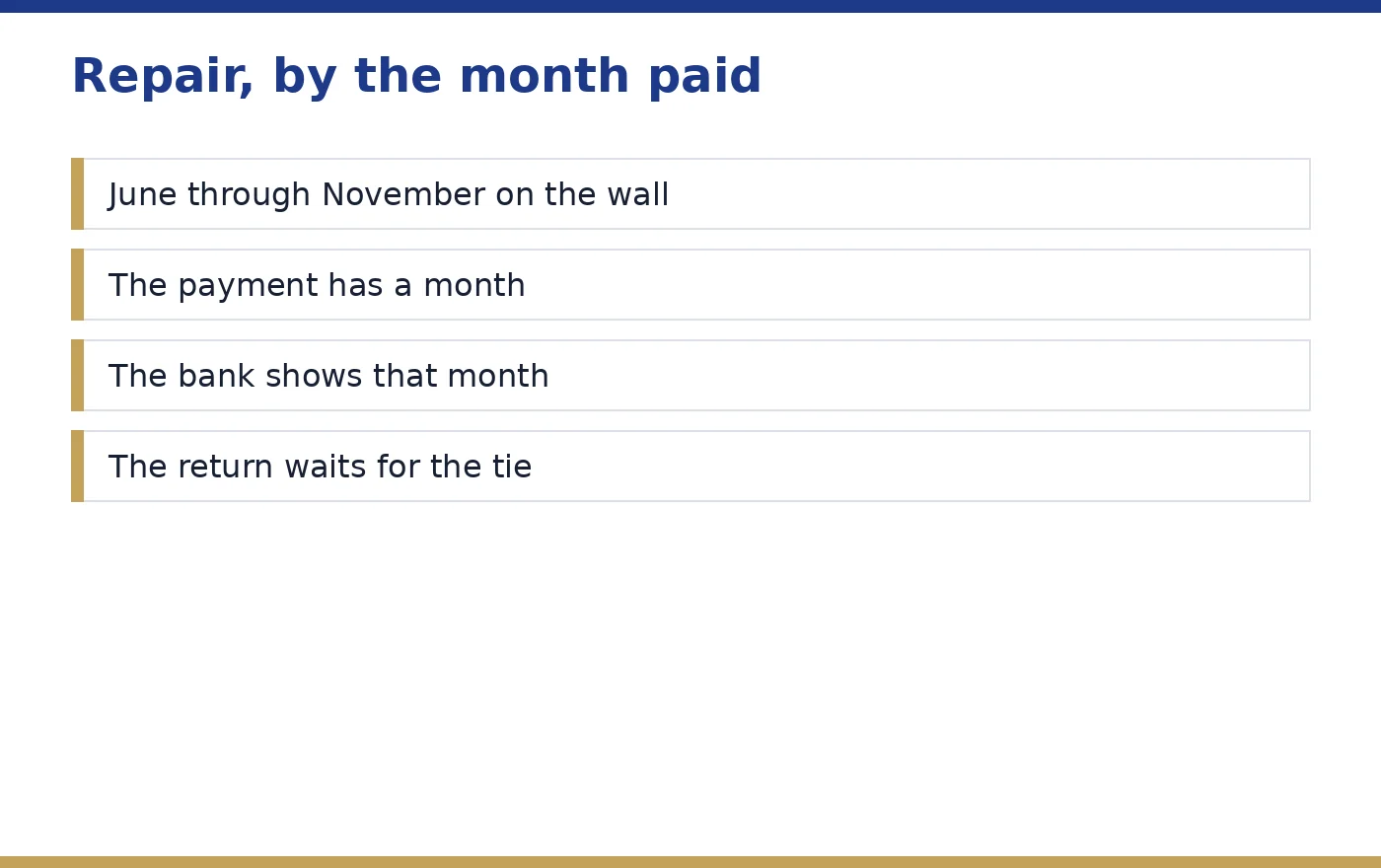
.The gulf storm window runs from the first of June through the last day of November, and a roofer keeps that stretch on the wall. We ask whether a repair was paid in the month the bank shows before the return treats that month as finished. A glance at the gulf never marks a month finished. The payment that cleared does.
A repair that is estimated is not a repair that cleared. The return follows the payment.
The same question shows up in a quiet month. Weather is only the reminder. The bank is the record.
The full order of that work is on the stack page.
What we look at before we quote
.The quote follows the pile, not a guess about the size of the shop. An open year of card deposits is a different quote from a year whose months already tie.
We ask which software already holds the bank feed. Moving the feed is a project of its own. We would rather read the feed you have than start a second set of books beside it.
Payroll setup is a yes or no before the quote. If payday already runs on a provider, the quote includes matching those wages into the books. It does not include taking payday over.
A sales tax address that has never been checked is a task inside the quote. We name it. We do not bury it inside a line called the return.
If a rendition date is inside the next two months, the quote says whether the list can be supported by closed months. A list without those months is a separate conversation.
You can bring a partial year. We will mark the months that are usable and the months that are not, and the fee conversation uses that mark.
The letter that names the fee is written only after we have marked which months are usable and which are still open. That letter names the months, the payroll setup, and whether the return is in or out.
A price never appears in this article. The price is the letter we write after the pile is marked, and this article only names what that letter has to describe.
Bring the newest month you trust even if the rest of the year is messy. That one month tells us whether the feed is usable, and the letter names the months that still have to be built before a return can start.
If the feed cannot be read, the letter calls the first job a catch up. The return is named later in that letter, after the months exist, rather than as the thing you buy on the first call.
