The list, and who signs it
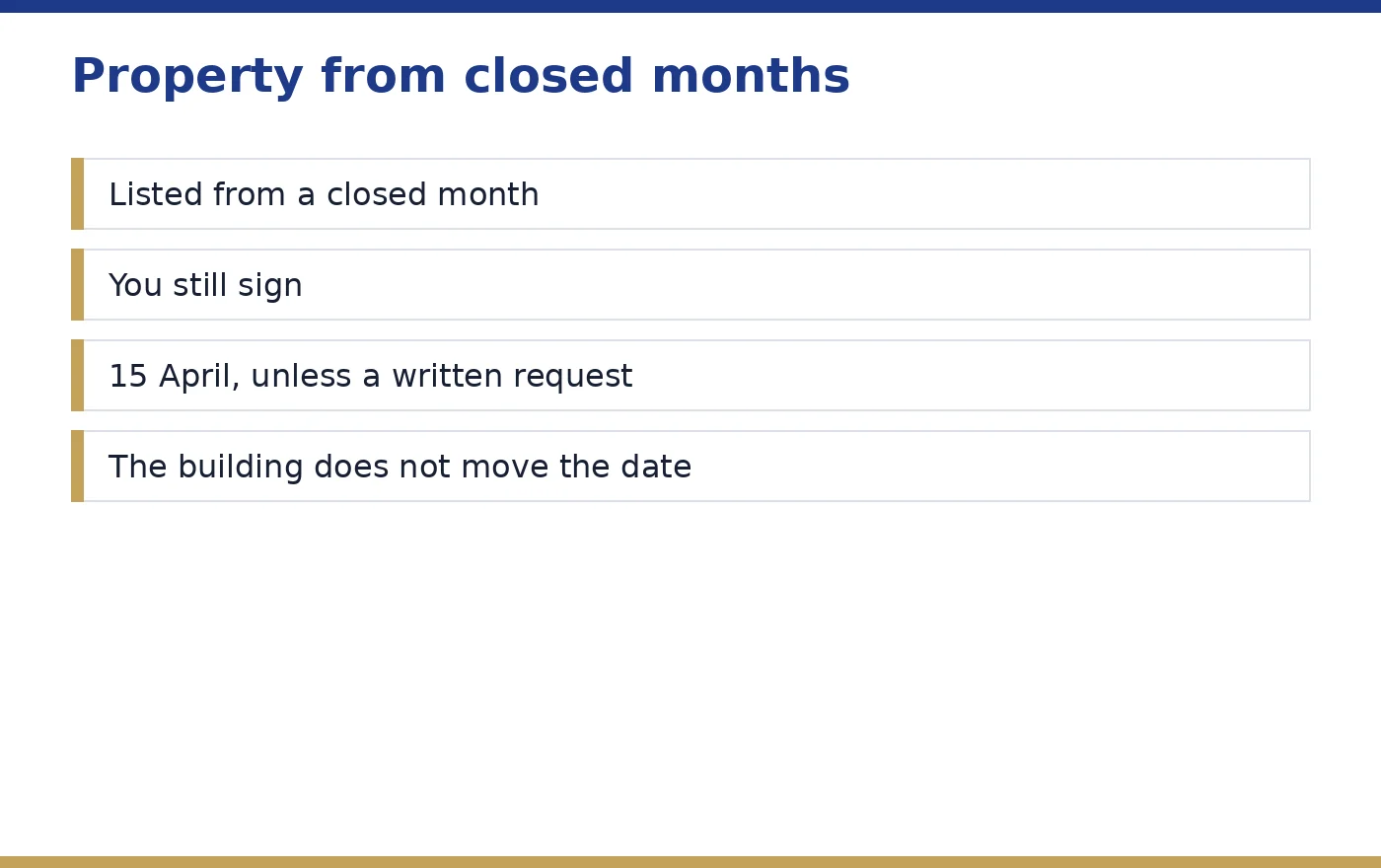
.A business personal property rendition is a list. We gather the list from closed months. You still sign it.
The usual last day is 15 April. The day reaches 15 May only when a written request is already in the file. Tax Code section 22.23 is the public source for that move, and the Comptroller property tax deadline calendar is the page we read beside it.
We use 15 May only when the written request is actually in the file. Planning to send the request, or remembering that someone meant to, leaves the due day on 15 April.
Harris Central Appraisal District offers an online rendition. When your file uses that path, we still want the same list, tied to the same closed months.
A protest uses whichever day falls later, 15 May or the day thirty days after the notice. We write the notice date next to the month the notice arrived so the later day is calculated, not remembered.
What the list is made of
.Furniture, equipment, and the other property the form asks about come from the months that already tie to the bank. A purchase in an open month stays off the list until that month is closed, or we mark it as still open.
A disposal works the same way. If the bank and the bill show the item is gone, the list should show it gone. If the paperwork is missing, the item stays and we say why.
We do not invent original costs, and we do not invent a depreciation story the file does not hold. If a figure is missing, the list says it is missing.
You are the one who signs. We prepare the support. Signing is not something we do in your place.
An appraisal district notice that disagrees with the list is a protest question, not a reason to rewrite history in the books. We put the notice beside the month and we read both.
The school district workbook, as a map
.In the Comptroller school district workbook, 64.33 percent of the city's 2020 census blocks sit inside the largest school district in Texas. We treat that share as a map of blocks, not as a bill for your address.
The figure the 2025 workbook prints, for each 100 dollars of taxable value, is 0.8783, and we show it as the district's number rather than as a value we computed for your equipment. Copied straight off the 2025 workbook, maintenance and operations is the 0.7116 piece and interest and sinking is the 0.1667 piece. The equipment list you sign does not pick up either piece.
That 64.33 percent share is a count of census blocks inside the largest school district, not a bill for one building. It also does not describe the business personal property list. The list is the equipment you sign for. The rate is a property tax fact that sits beside the file when an address needs it.
We name the workbook so you can see where the rate came from. We do not treat the rate as a result we produced.
The date a show does not move
.We still gather the property list from closed months, and a building a show left behind does not change the 15 April date. The list comes from the months the bank already matched. The move of a show does not add a line, and it does not move the date.
A move of a show is not a move of your filing day. The written request is the only ordinary way that day slides to 15 May.
The franchise report, which is due the same month for a different reason, is on its own page. The two dates can share a season without sharing a form.
If the list is the thing your year is waiting on, say so. We will tell you whether the months behind the list are closed enough to support it.
How this sits in the stack
.The rendition is one item in the stack, not the whole stack. The jobs around the list are still the books, payroll arranged on your system, the statements, and the return. The list is the property those months can support.
An open December keeps the January rendition off the table, or the support marks December as still open, because a list built on an unfinished year is a guess. An open December makes a January list into a guess.
When the list is ready, you sign it. When it is not, we say which month is the holdup.
Nothing here is a value for your property, and nothing here is a promise about a protest outcome. Those depend on the file and on the notice, read together.
What stays off the list until the month closes
.A purchase from a month that has not tied yet stays off the signed list, or the support marks that month as still open. A purchase order is not the purchase.
A repair that only keeps an old machine running is a repair. We ask whether the bank shows a repair bill or a replacement before anything new is added.
When two entities share a shop, the list follows the entity that owns the item. The entity that pays the rent is not automatically the owner.
The appraisal district offers an online rendition as a way to file. That screen does not fill itself from our notes. You still review the support, and you still sign.
A notice that arrives after the signature is a new question. We set the notice beside the list. We do not quietly rewrite a signed list so it matches the notice.
If December is the open month, a January list is early. We finish December, or we mark the list as waiting on December, and we say which one out loud.
