
Tax Preparation Services Houston prepares the return.
You came for the return, and Steven Palmieri prepares it as a Tax CFO and as the Entrepreneur's CFO from a month you already trust.
Ask about the return

You will be talking to the Steven Palmieri practice.
Steven Palmieri prepares this return from the Dallas practice. Owners in Houston join the video call, and an unmatched month still stays off the return.
The Tax CFO way with a return.
A tax preparer takes the numbers you have and files them. The Tax CFO closes the months first, then decides what the return should say before December: the paycheck, the estimated payment, which year carries the purchase. Preparation then reads a year whose paycheck, estimate, and purchase year were already chosen.
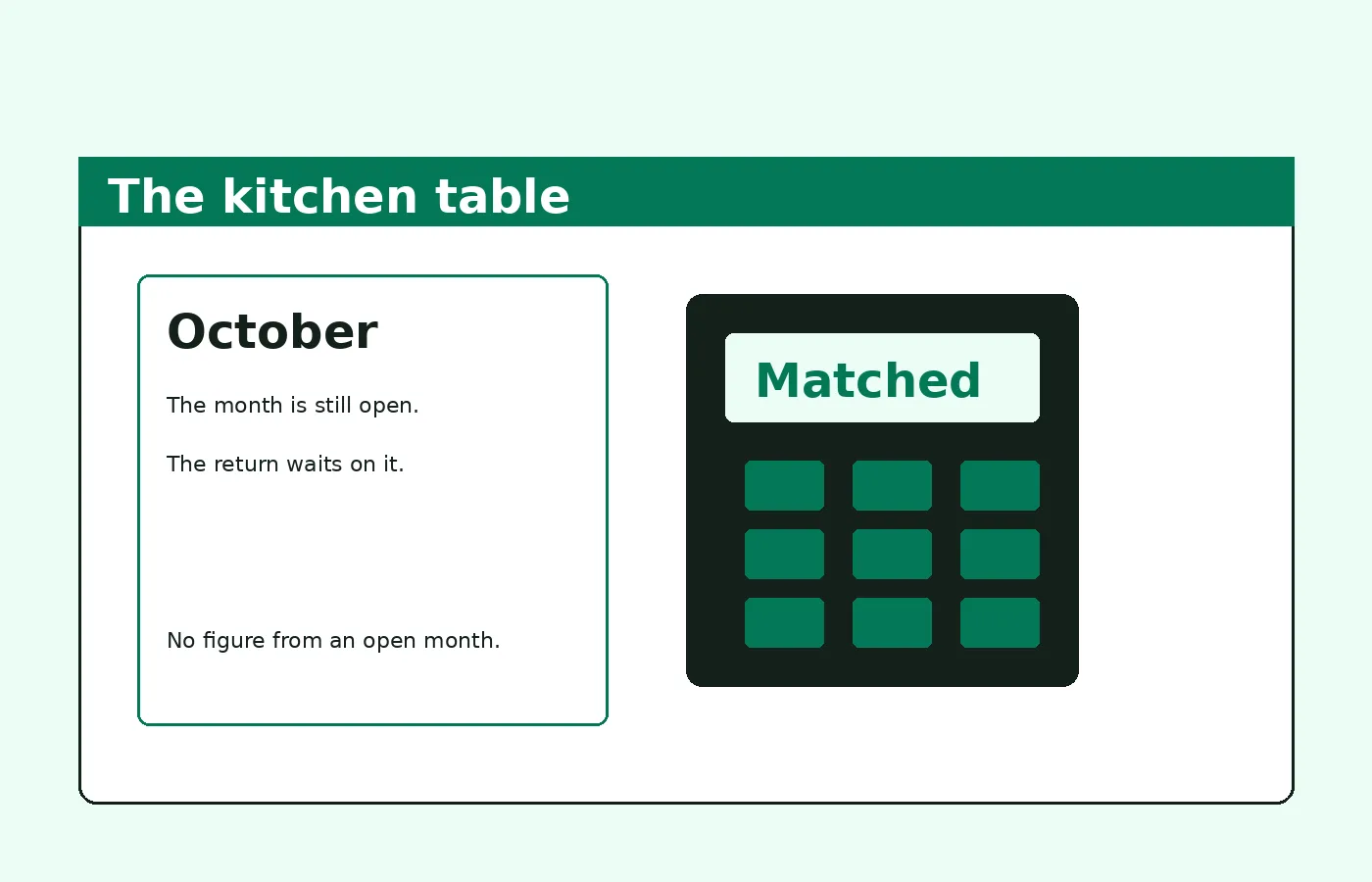
The month the bank matched
We finish the month before anyone asks the return to use it.
Click to see the close ›Tap to see the close ›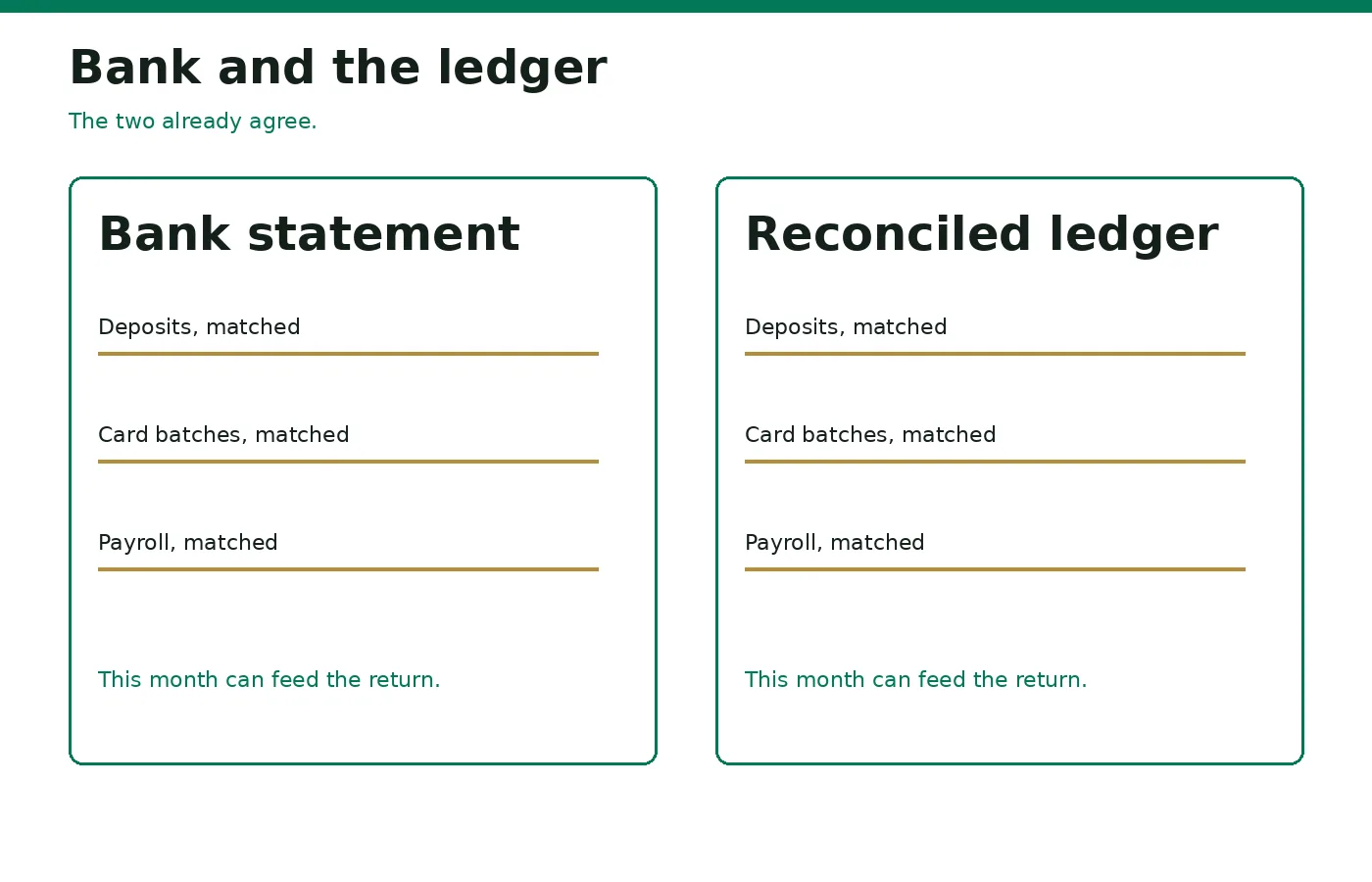
What the return uses
Wages, sales tax, and income stay off the return until the month they came from already matches the bank.
Click to see the return ›Tap to see the return ›
Dates beside the return
Summer is the busy season for air-conditioning shops. We ask whether the repair was paid in the month the bank shows.
Click to see the dates ›Tap to see the dates ›
Questions owners ask
We ask which month the shop's deposit posted.
Click to see the answers ›Tap to see the answers ›
The property list
We gather business property from closed months, and you still sign.
Click to see the list ›Tap to see the list ›
Steven Palmieri, Tax CFO
Steven Palmieri and the team: the books, payroll setup, and the return, in that order.
The monument marks one day the whole outcome turned on. The return turns on one month, the last one the bank agreed with.
Click to see the practice ›Tap to see the practice ›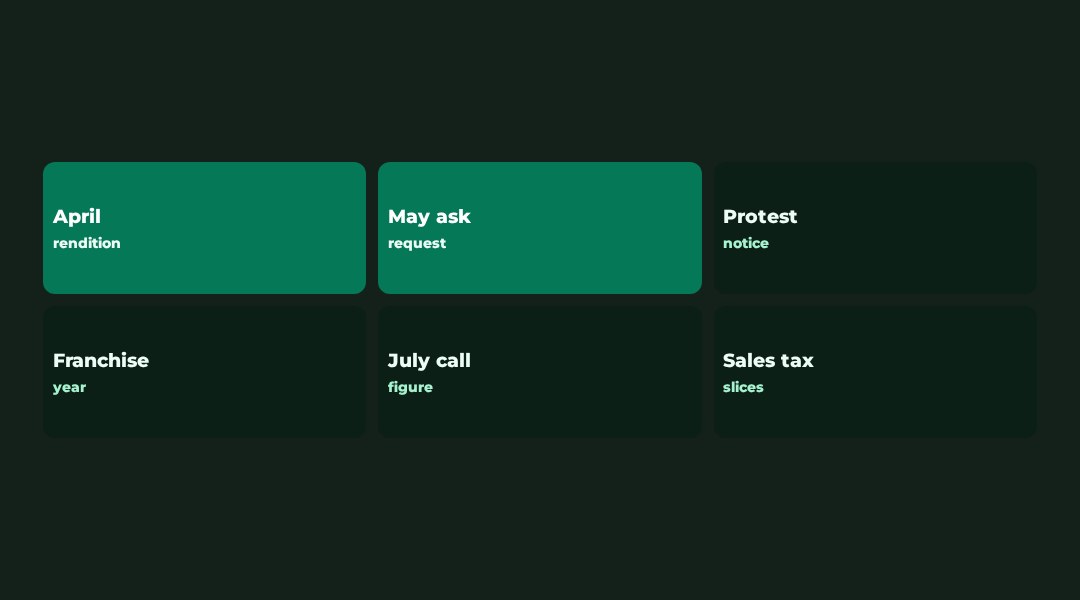
Six dates before the return
Open a date. We say what we prepare before the return goes out.
1April
Renditions of business personal property are ordinarily due on 15 April. We read that day only after the list comes from a month the bank already matched.
Support for that April list is copied from months that already tie. The signature on the rendition stays yours.
2May ask
A written request can move that rendition to 15 May, and we use the later day only when that request is actually in the file.
We note the request beside the month it was sent.
3Protest
We take 15 May as the protest day unless thirty days counted from the notice land later, and then we use that later day. We calculate that later day from the notice, not from memory.
We put the notice date next to the month it arrived.
4Franchise
The franchise report still goes out on 15 May in a year when the tax itself is zero, and the year we use is the one already closed.
We build that franchise report from the year already closed. You review the year it covers before it goes out.
5July call
In July the call names one figure drawn from a month whose bank tie is already done. An open month does not supply the figure.
We bring that figure. You say whether the shop still looks like it.
6Sales tax
Inside the city limits the slices are state 6.25, city 1, and the transit share 1, and we will not blend them into one unnamed rate.
We check the address before any of those slices is used on the return.
Tell us about the return.Click to tell us about the return ›Tap to tell us about the return ›
Tell us about the return
.Name the month you trust and what the return is waiting on.
Texas owners sit with us by phone or on a video call, and the return still waits on a month the bank has matched.
You will be talking to the Steven Palmieri practice.
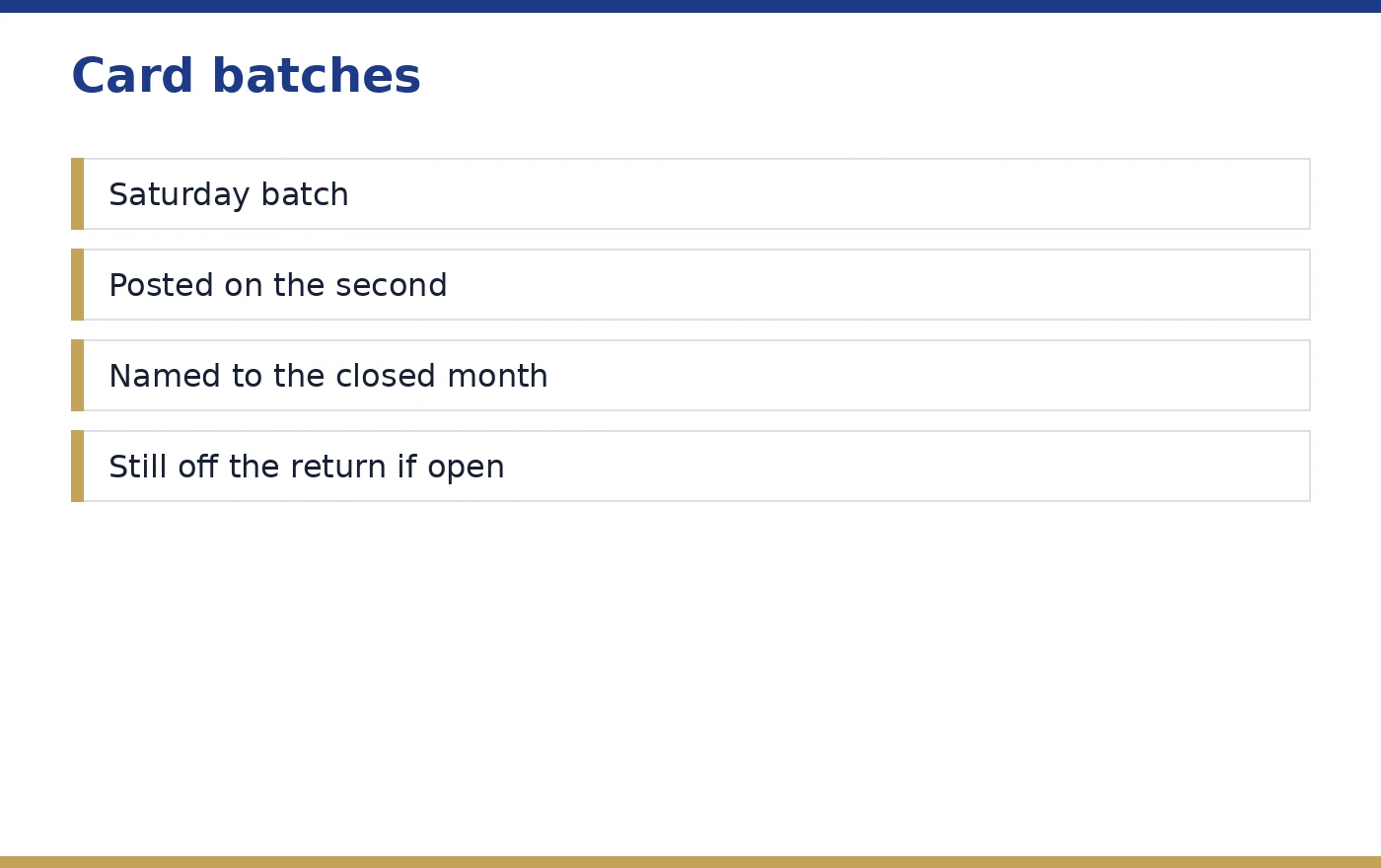 Card sales in a busy week.Click to read the week ›Tap to read the week ›
Card sales from a busy weekend still have to be named to a month before the return can use them. We ask which month those card sales were collected, because the return uses the month the bank already matched. The deposit date names the month, and an open batch stays off the return until that date is tied.
Take a restaurant with two locations in the same county. A card batch from one location stays off the return until that location's own deposit month is the one the bank already matched.
If the card batch posted on the second, that batch belongs to the month that already ties. The Saturday people remember is the memory. The deposit date is the month we use.
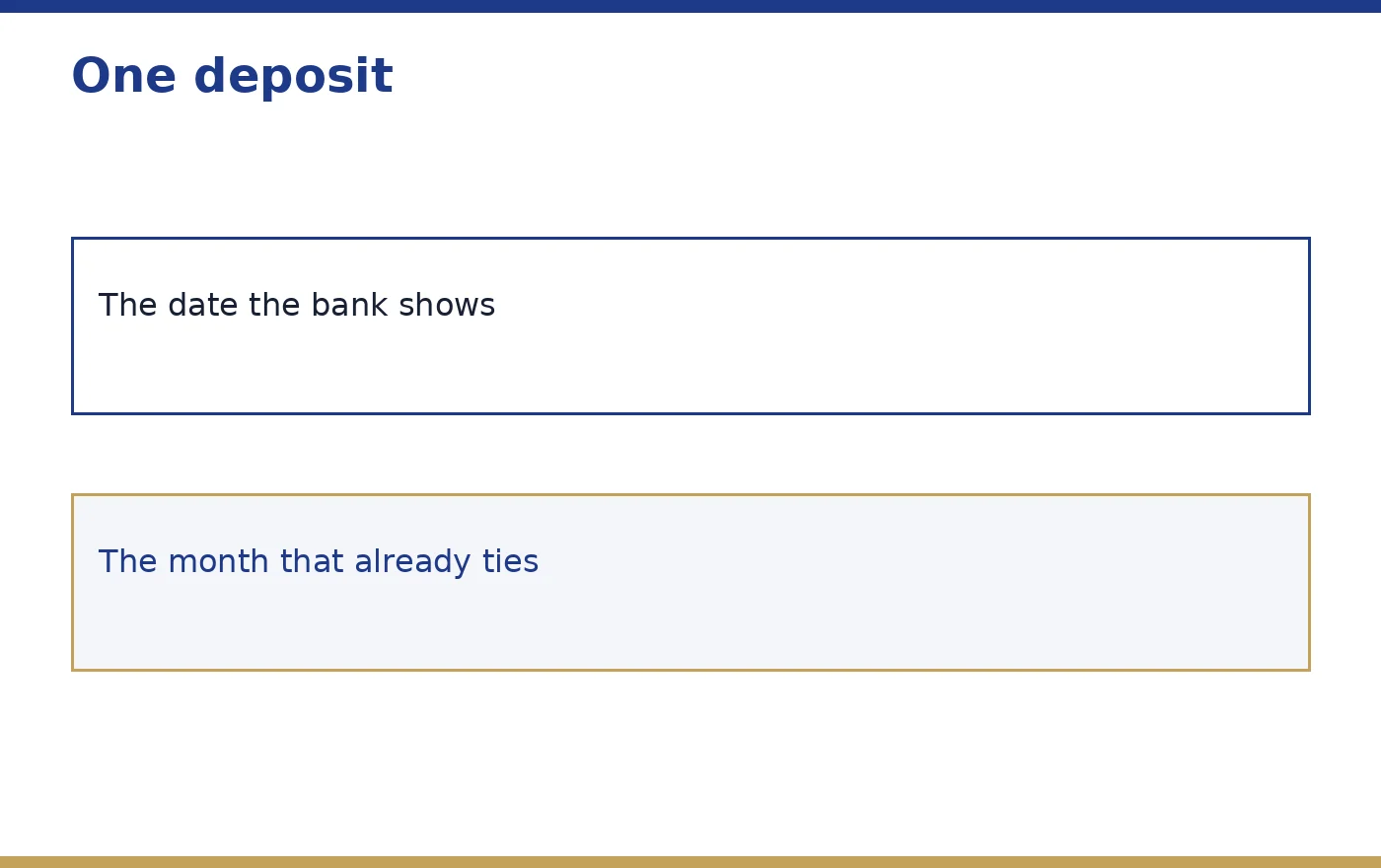 A weekend deposit.Click to read the stroll ›Tap to read the stroll ›
A weekend shop can take in a pile of card sales and still have no closed month behind them. We still ask whether the shop that weekend closed the month the deposit posted. The deposit date is the record the return can use. If that deposit is still unmatched, the return waits until someone names the month it belongs to.
The day the shop remembers and the day the bank posts can sit in two different months. We write the bank's day on the note we send back, and the return uses that day once the month around it already ties.
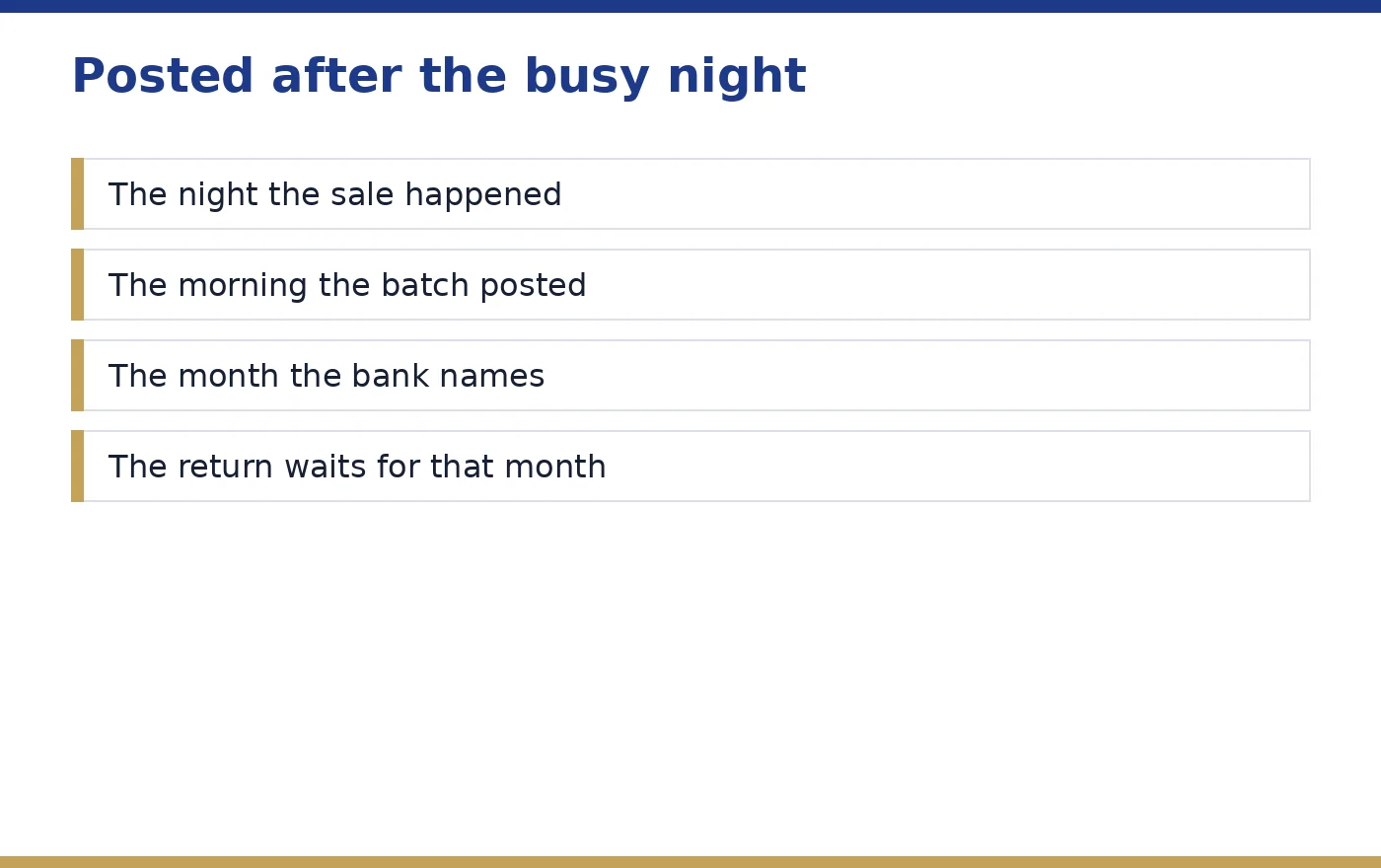 The night a deposit posts.Click to read the night ›Tap to read the night ›
After a busy night, we look at the morning the deposit posted, because the return waits on the month the bank already matched.
A midweek deposit can belong to the prior month or the new one. We read the bank line for that month, and we write it on the note we send back.
 The hot months.Click to read the heat ›Tap to read the heat ›
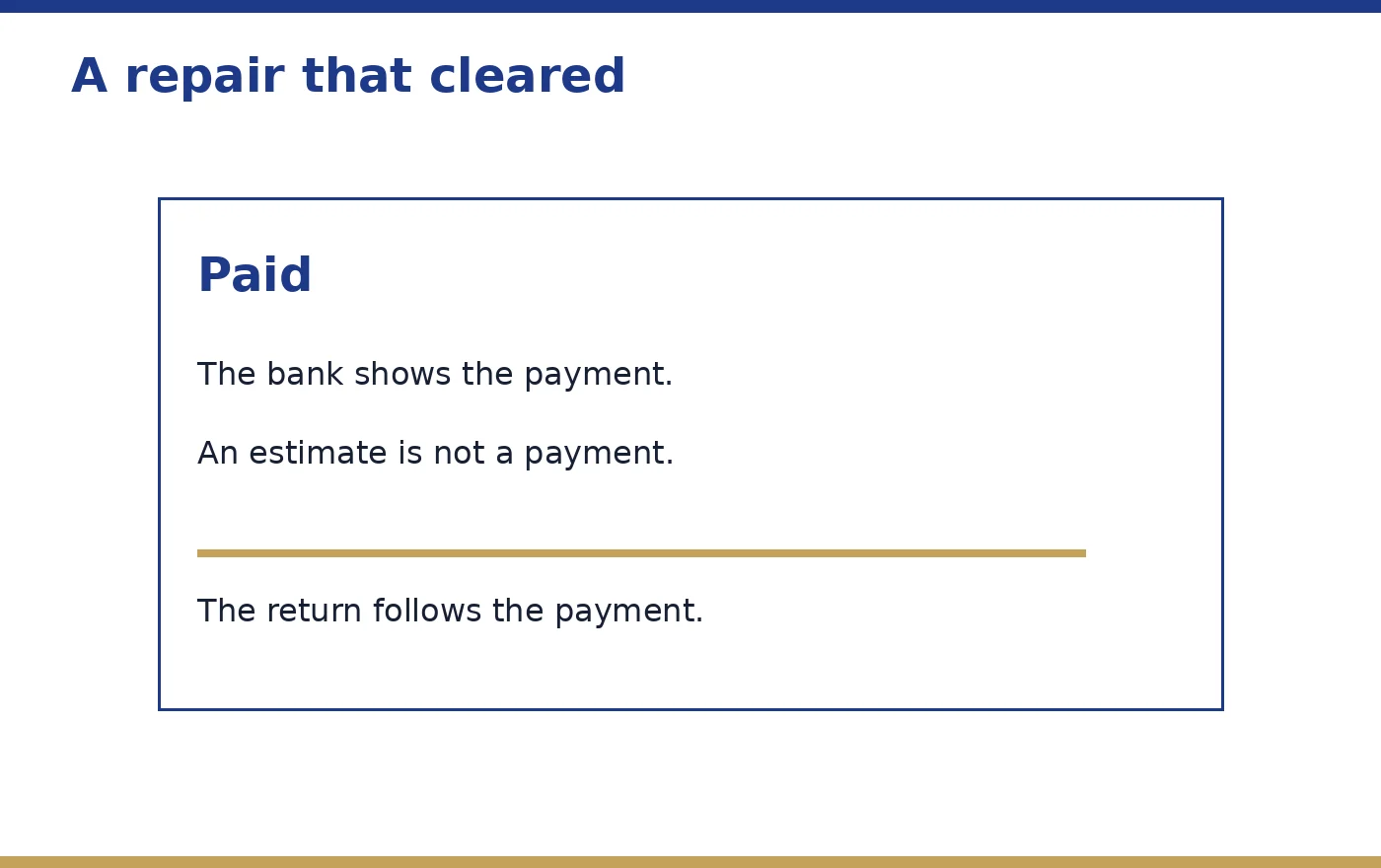
We ask whether the repair bill landed in the month it was paid, before the return treats an open month as finished. The payment that cleared is the record. An estimate stays a quote until that payment shows on the bank line.
A repair paid in August is an August fact once the bank shows it. Only a payment the bank already shows can land on the return.
 The order of the work.Click to read the order ›Tap to read the order ›
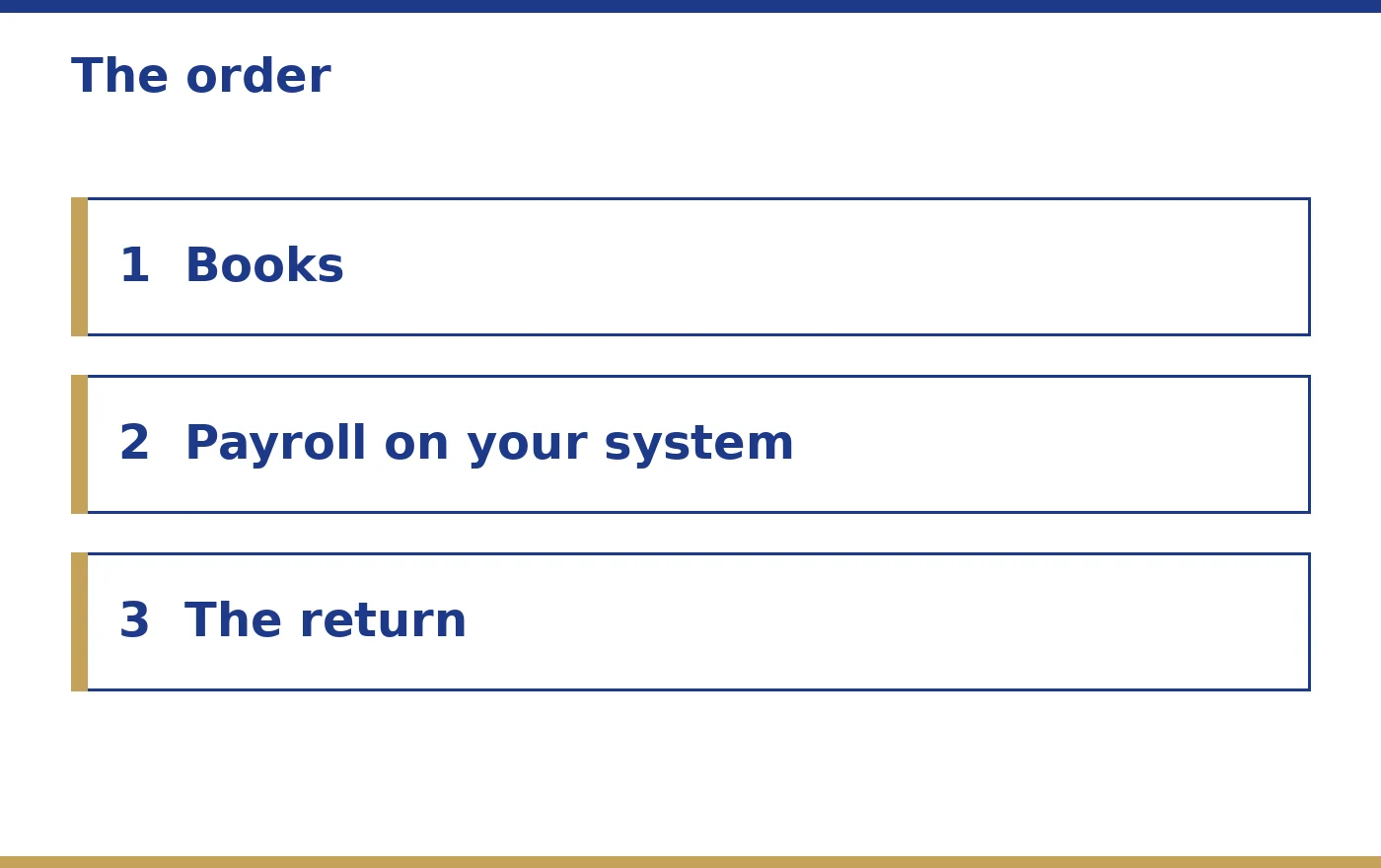
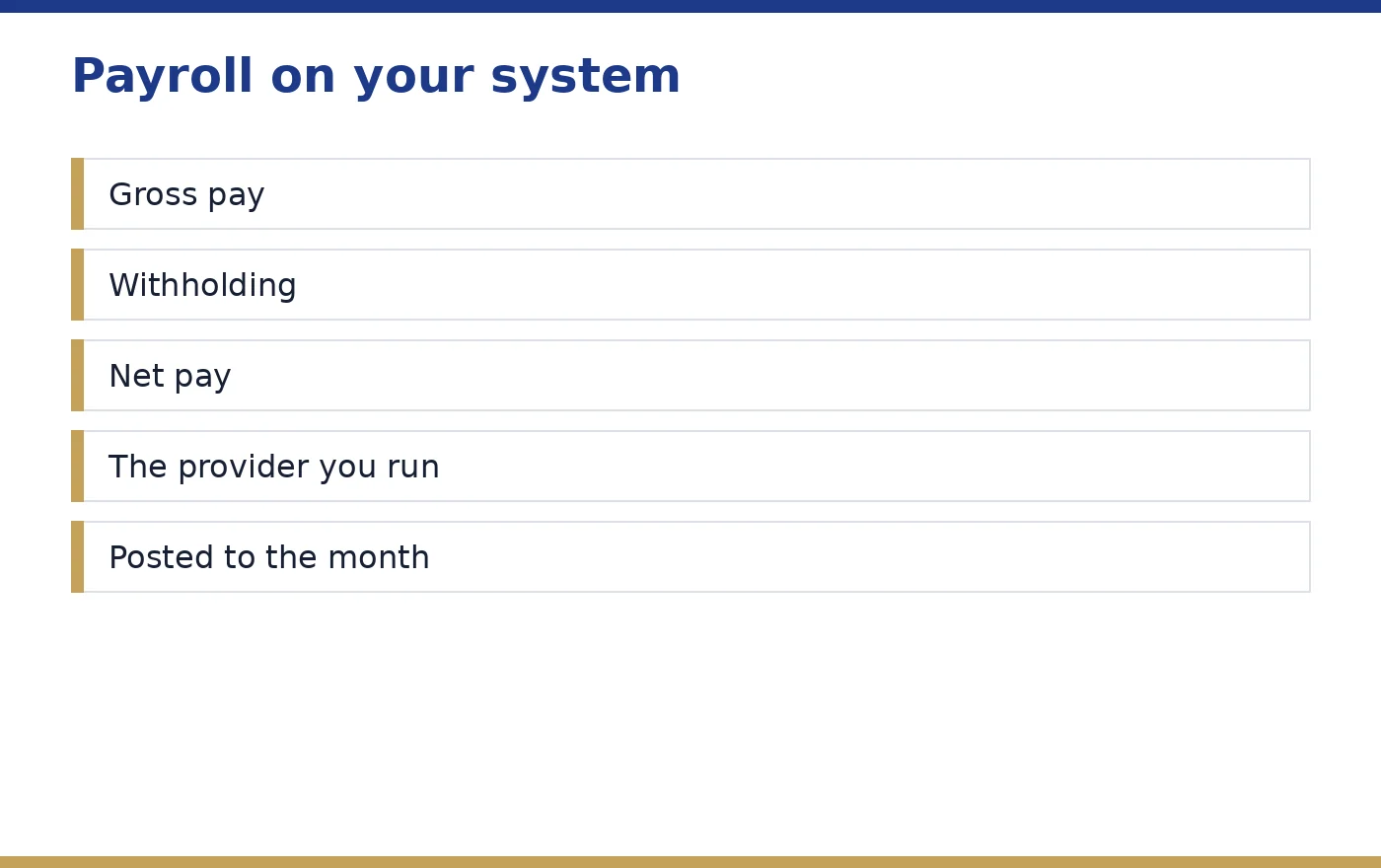
We close one month at a time until the bank agrees, and the return starts the day that month holds. Nothing on that return comes from a month the bank has not stood behind. We keep the books first. Payroll is arranged on the system you already use to pay people, and payday stays on that system. The wages leave that same system. We do not open a second payday beside it. Reconciliations and the statements come next. Only after those ties exist do we let the return read the year, and a month the bank has not matched stays off it.
Financial clarity, in this practice, is a month you can hand to someone without a speech. Clean numbers are the ones that already agree with the bank, the card batches, and the payroll provider.
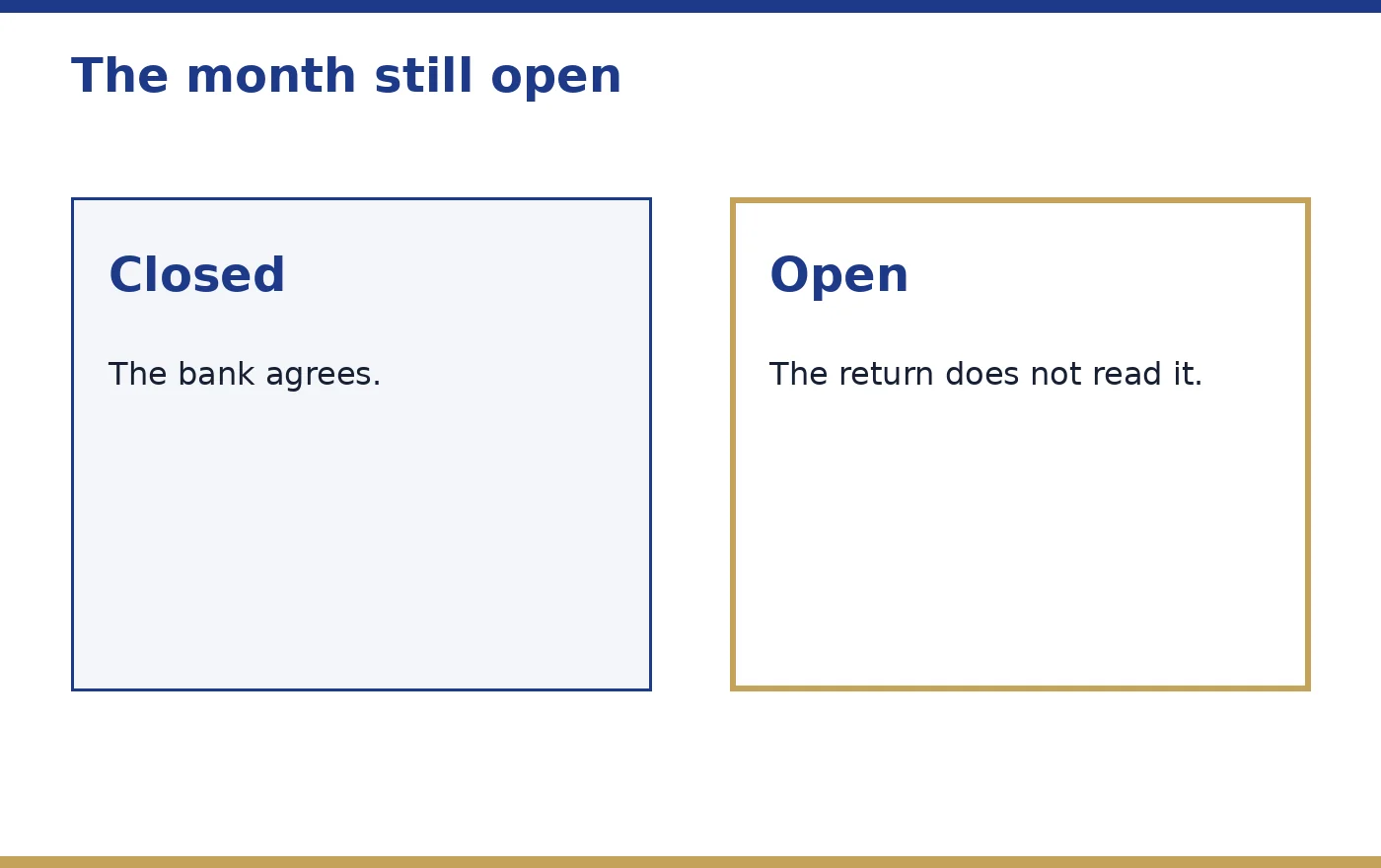
If the newest month you trust is March, we do not pretend April is ready because the calendar turned. We say which month is closed and which month is still open.
Reports are the sentences those closed months can support. A report built on an open month is a draft, and we label it that way until the bank tie exists.
 What we will not start.Click to read the pause ›Tap to read the pause ›
A monthly read starts only on a stretch the bank has already matched. If those months are still open, the first conversation is about finishing them or about waiting, and we name that choice before any letter is signed.
An open vendor bill, an unmatched deposit, or a payroll run that never landed in the books is a reason to pause. It is not a reason to guess a line on the return.
A shop in Harris County keeps the records with the practice that prepares the return. The call stays on the phone or on video, and the file stays with the people who prepare the return.
We name the open month in the note we send back, so the return is not asked to treat a guess as a closed figure.
 The slices on a sale.Click to read the slices ›Tap to read the slices ›
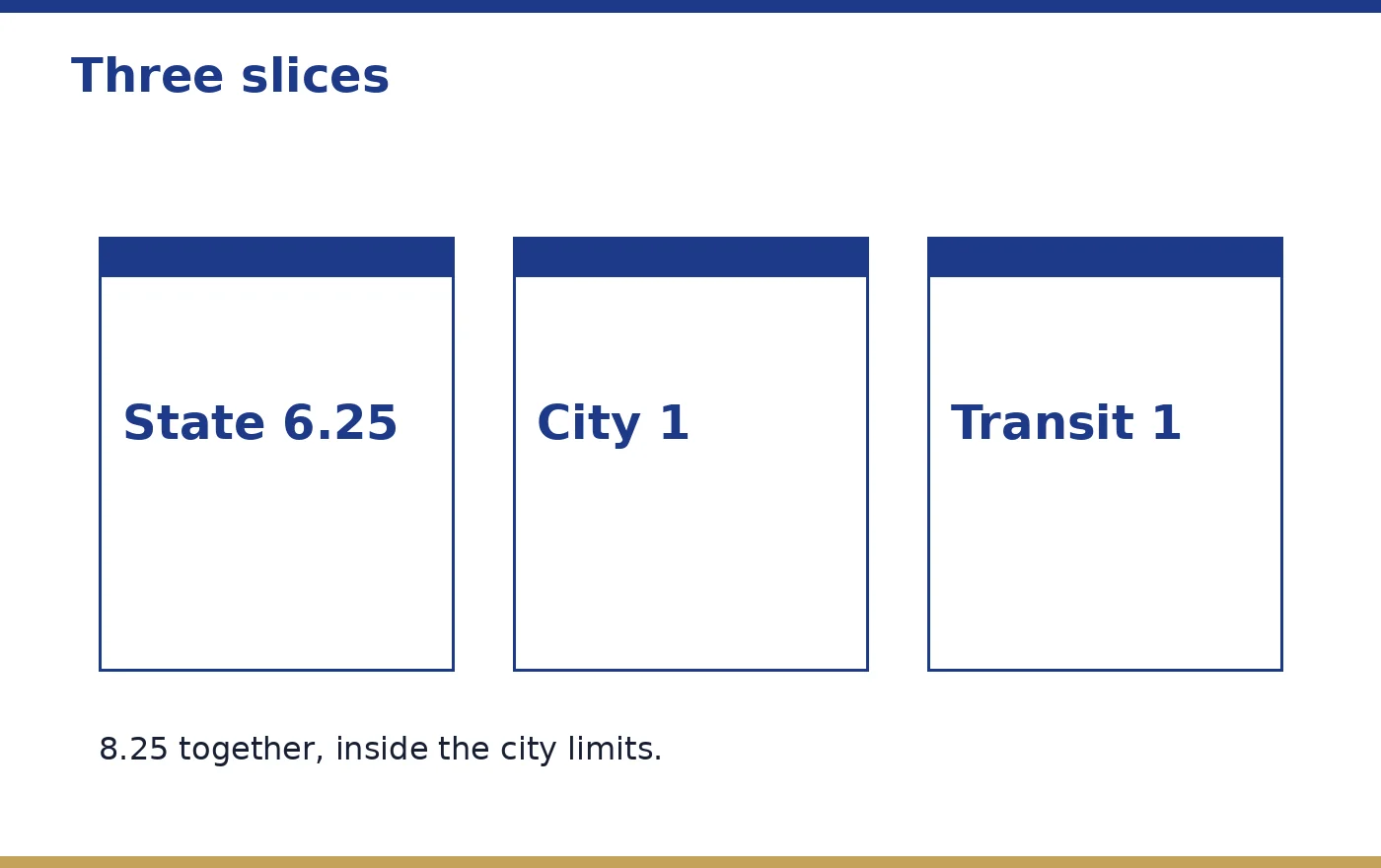
Inside the city limits a taxable sale carries three named slices, and we will not blend them into one unnamed rate. State, city, and the transit share are each checked against the address before one of them is written down.
The county itself adds no sales tax row on a sale inside the city limits. A shop across a county line can show another local row, so the address is part of the close, not a footnote after the return is drafted.
Sales tax for a tied month is filed by the 20th. We tie the month before that date is treated as a deadline for numbers nobody has matched.
 Who answers.Click to read who answers ›Tap to read who answers ›
On this work the Tax CFO is Steven Palmieri. Three jobs live here, the books, payroll arranged on your system, and the return. Steven and his team read the note you send. The decisions still open this year are which month you already trust, which bill has not cleared, and when we let the return start.
Closing the tab leaves you exactly where you were. A form or a booked time asks for a conversation, and neither one is an engagement.
What we will not sign is written on the disclosures page. Read that limit before you ask for a report that needs another firm.