The order we actually work
.What arrives in the owner's mailbox is the closed month, and it arrives while the bank feed for that month is still fresh. Monthly bookkeeping is the first movement, written while the feed is new, and it is not optional if the return is going to be ours. Next in that same packet is the payroll setup on the system you already use to pay people, so payday stays there and the wages in the books match the wages the provider already knows. The reconciliation comes after those two. A month that does not tie is not a month the statements can describe as finished, so the mailbox waits until the tie is real and the owner can read the month as closed.
Statements and the other reports follow the tie. They are how a tied month gets read by a person who never stood in the shop.
The dates come after that, because a due date applied to an open month is a calendar trick. The rendition, the franchise report, and the sales tax 20th each wait on their own source.
The return comes only after the books, the payroll setup, the reconciliations, and the statements. It reads the closed year. It does not create the year.
Why the order is the product
.Owners ask for the return because that is the thing with a deadline they can feel. The work that makes the return true is the months before it.
If you hire us for the return alone and the months are open, the first thing we do is still the close. We would rather say that at the start than discover it in April.
Once the bank feed is live, a monthly tie is priced apart from the catch up of a year that never closed. Both prices live in the scope letter. Read this article from top to bottom and neither of those two prices appears, because both belong in the letter.
Financial clarity is the moment you can name the last closed month without apologizing for it.
Saturday, and the weekday after
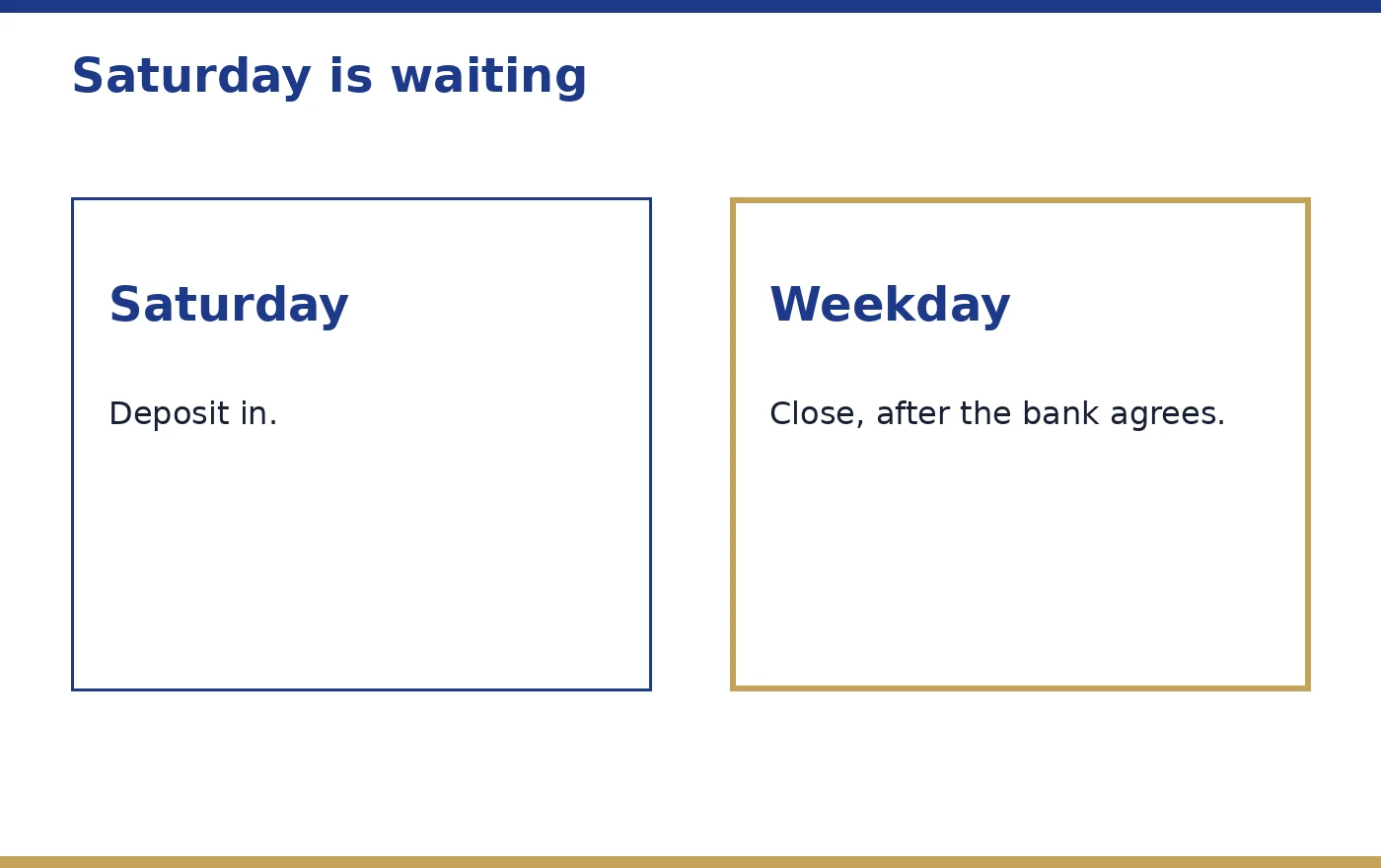
.A Saturday deposit from a full afternoon still waits for a matched month before the following weekday's close is allowed to touch it. The afternoon is not the source. The bank line is, and we do not let Saturday pick the month the close is allowed to use.
A Saturday does not close itself on Monday. The batch might. We look at the batch.
If you want the version of this order that starts from the questions, read what a close asks.
What each step hands to the next
.The books hand a month to the reconciliation. If the month is missing a deposit, the reconciliation says so instead of forcing a tie.
The reconciliation hands a tied month to the statements. A statement that starts before the tie is labeled a draft, and the draft is not the report we stand behind.
Payroll setup hands wage totals that match the provider. When the payroll system and the books do not agree, the return waits until that gap is named. We do not average the two.
The dates hand a deadline only after the source month exists. A 20th with no tied month is a reminder to finish the month, not a reminder to file a guess.
The return receives the closed year and gives it back as a draft you can read. You see the income, the wages, and the sales tax slices before anything is called final.
Skipping a handoff is how a figure gets born twice. We would rather be slow at the handoff than fast at a rebuild in April.
If you already have statements from another reader, we still start at the books. A handsome statement does not replace the tie, and we will say so before we agree to stand behind the year.
